What Most Property Managers Never Ask Before Hiring a Rope Access Contractor
When it comes to exterior maintenance on high-rise buildings, property managers and HOA board members are skilled at evaluating price. They know how to compare bids, review insurance certificates, and check references.
But there are a few critical questions that almost never come up before a project is approved — questions that, if left unasked, can create significant operational and financial exposure for the property.
Here is what experienced building professionals know to ask before any contractor descends from the roof.
1. What insurance classification is covering this work?
This is the question that separates informed buyers from everyone else.
Not all Workers’ Compensation policies are the same. Coverage depends heavily on the class code under which a worker is insured. Some contractors performing work at height are classified under low-risk codes — the kind used for cleaning crews or maintenance workers operating at ground level.
If a worker is injured performing rope access at the 30th floor and their Workers’ Comp policy is classified under a ground-level code, the insurer may dispute the claim. In that scenario, the financial exposure does not disappear. It shifts — potentially toward the property owner or association.
Before approving any exterior maintenance contractor, ask to see their Workers’ Compensation documentation and verify the class code matches the actual scope of work.
2. What is the rescue plan if something goes wrong?
Most people assume this is a problem that gets resolved by calling 911.
In many cases, it is. But that assumption comes with real consequences for the property: emergency vehicles on-site, disruption to residents, and a significant administrative burden in the aftermath.
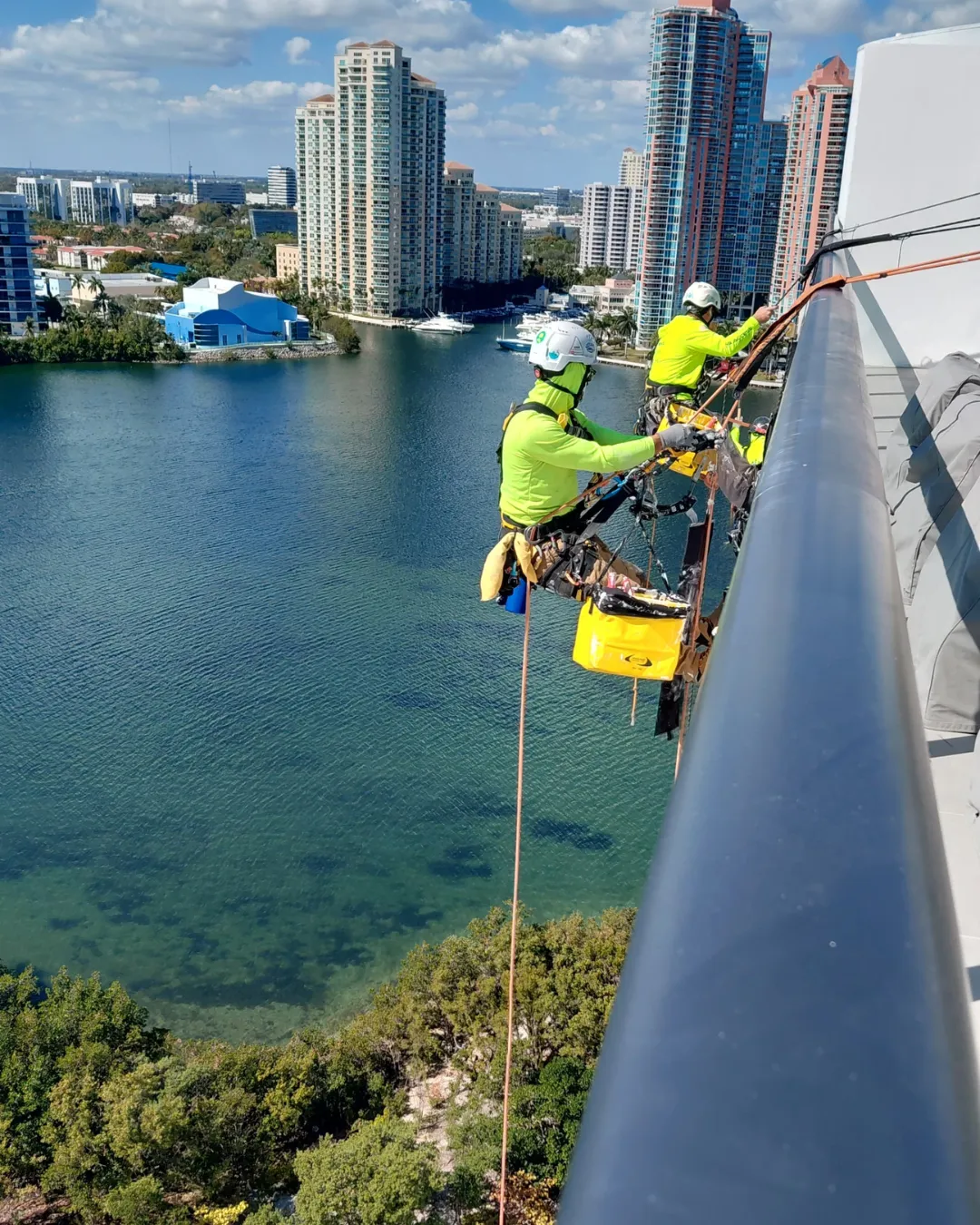
Certified Industrial Rope Access crews operate under a different standard. Under IRATA and SPRAT protocols, every team member is trained to execute an aerial rescue of a colleague without outside assistance. Incidents can be resolved within minutes, without emergency services, and without the disruption that follows.
Before any project begins, ask the contractor to explain their rescue procedure in specific terms. A qualified provider should be able to describe it clearly.
3. What documentation will you receive after the work is completed?
The project ends. The contractor leaves. What remains?
For a property manager, this matters more than most contractors acknowledge. Board members need records. Legal teams need paper trails. Future vendors need context.
A professional close-out package should include before-and-after photographs organized by elevation, daily work logs, a record of areas serviced, and notes on any conditions observed during the operation. If a contractor cannot describe what their documentation looks like before the project starts, that is worth factoring into the evaluation.
4. What anchor system will be used, and will it affect the roof warranty?
Rope access equipment has to connect to the building from somewhere. How that connection is made is not a minor detail.
Informal operators often secure their lines to whatever appears load-bearing — drain pipes, mechanical units, or structural elements not designed for that use. This can damage existing roof systems and, more importantly, can void the roof warranty if penetration or stress damage occurs.
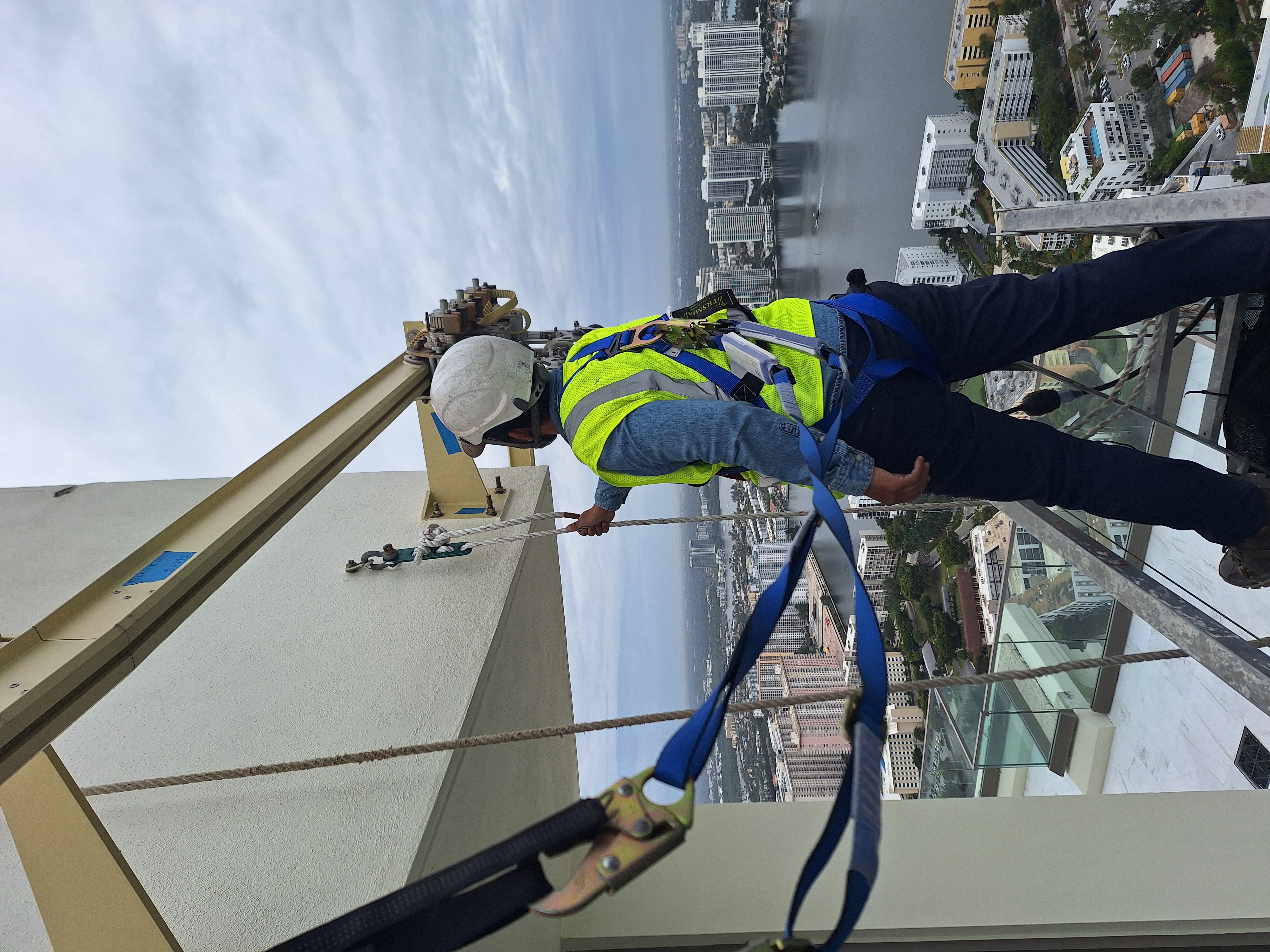
Professional rope access operations use certified anchor systems and edge protection designed to protect the building envelope. Asking a contractor to describe their anchor plan — and confirm it does not affect the roof warranty — is a reasonable question that any qualified provider should be prepared to answer without hesitation.
5. Who will you be communicating with during the project?
During a multi-day exterior operation, conditions change. Residents have concerns. Schedules shift. Unexpected findings appear on the facade.
Many contractors have one person doing everything: supervising the crew, managing the equipment, and fielding calls from building management. In practice, this means calls go unanswered and updates arrive late.
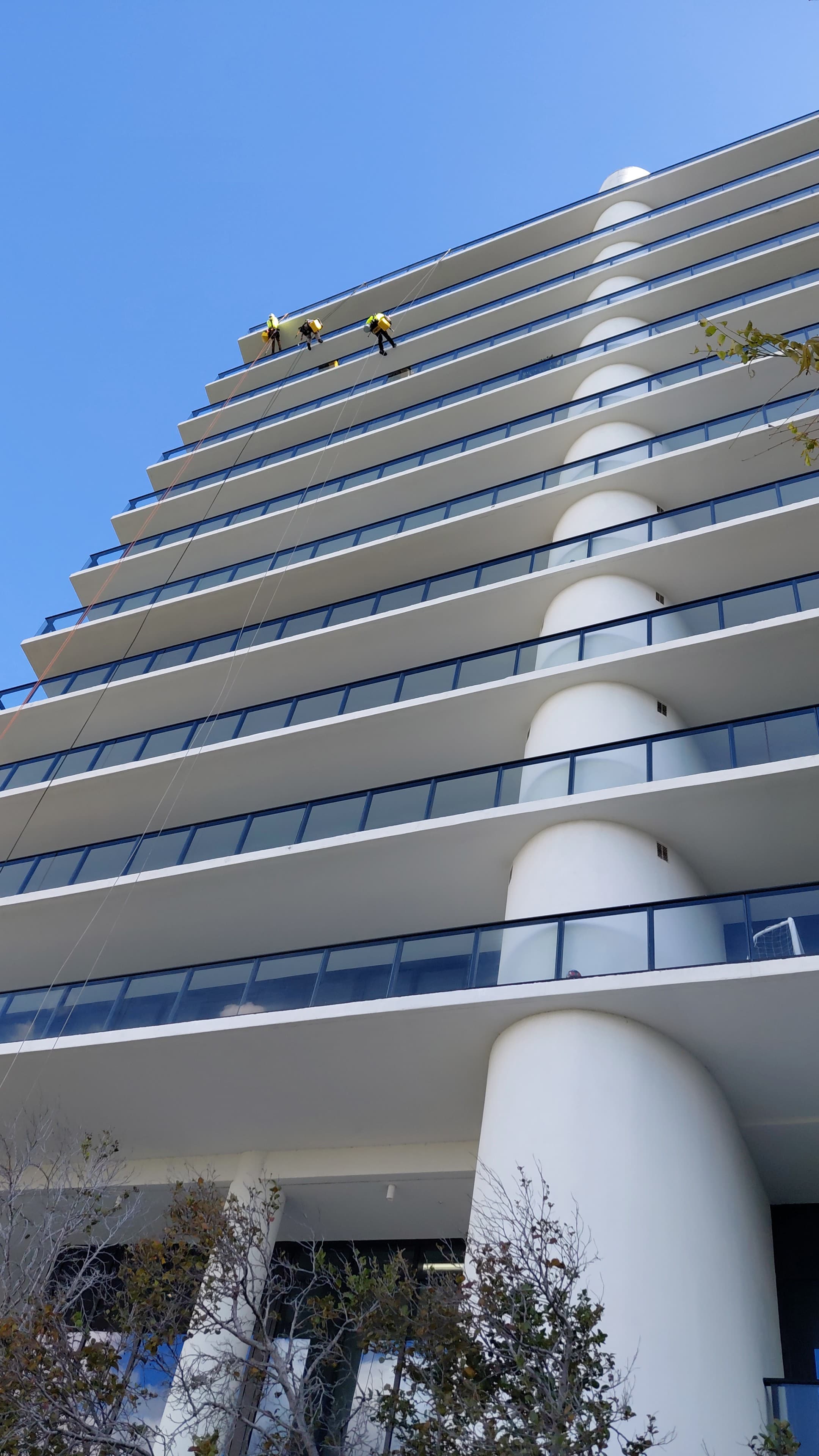
One operational structure that addresses this directly is a dedicated Ground Manager — a person whose sole responsibility is to remain on the ground, coordinate with building staff, manage the work perimeter, and serve as the single point of contact throughout the project. It is not a universal standard in the industry, but it is worth asking about before selecting a vendor.
The pattern behind these questions
Each of them shares something in common: they are not about whether the work can get done. They are about what happens when something does not go according to plan.
Price, experience, and references matter. But the contractors who can answer these questions clearly are usually the ones whose operational model reflects the same attention to detail they bring to the job itself.
RIG ACCESS Vertical Solutions provides Engineering-Grade Industrial Rope Access for high-rise properties across Miami-Dade, Broward, and Palm Beach counties.